...
Menu

Sheridan College Coach Pento Joins Satti’s 17U Championship Squad

LATEST NEWS

Long volleyball rally: over 1 min

Long volleyball rally: over 1 min

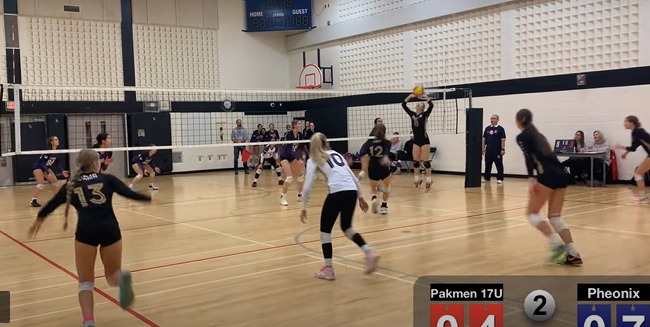
It happened in the Gold Medal game between Pakmen 17U Gold and Phoenix Legacy (17U) at OVA Challenge Cup, on Dec 2 2023, in Oakville:
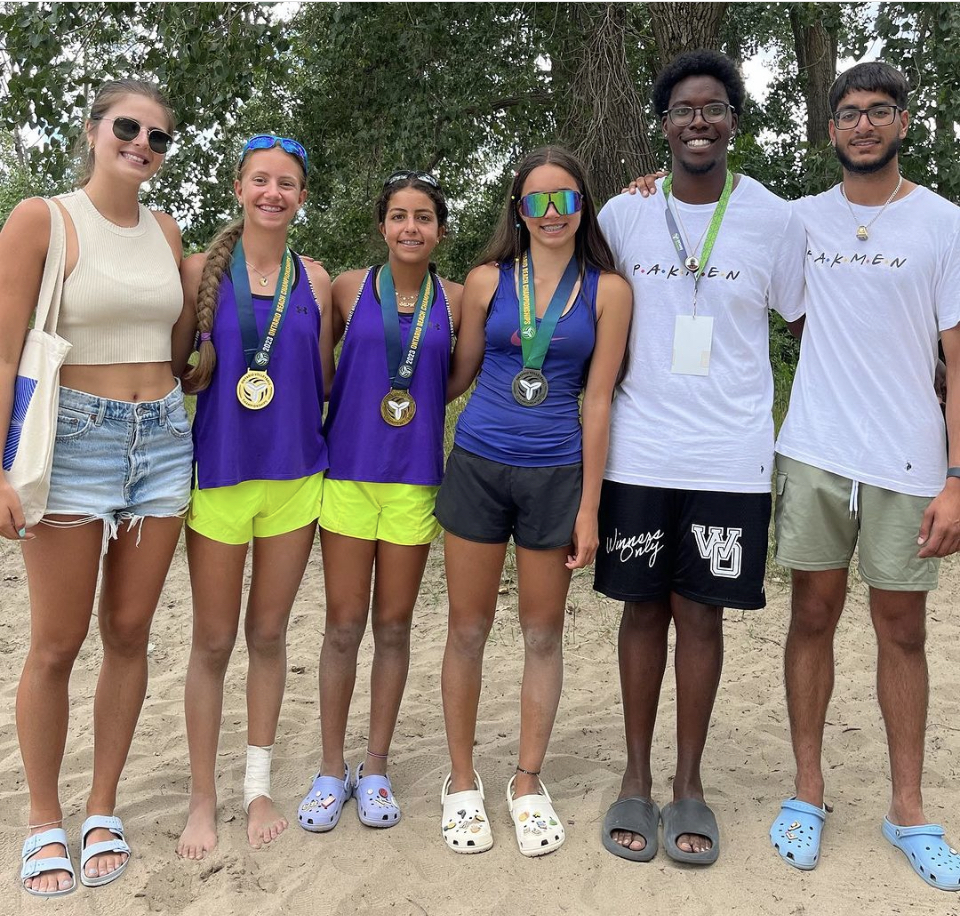
Pakmen own the podium at OVA Beach Provincials

Pakmen own the podium at OVA Beach Provincials

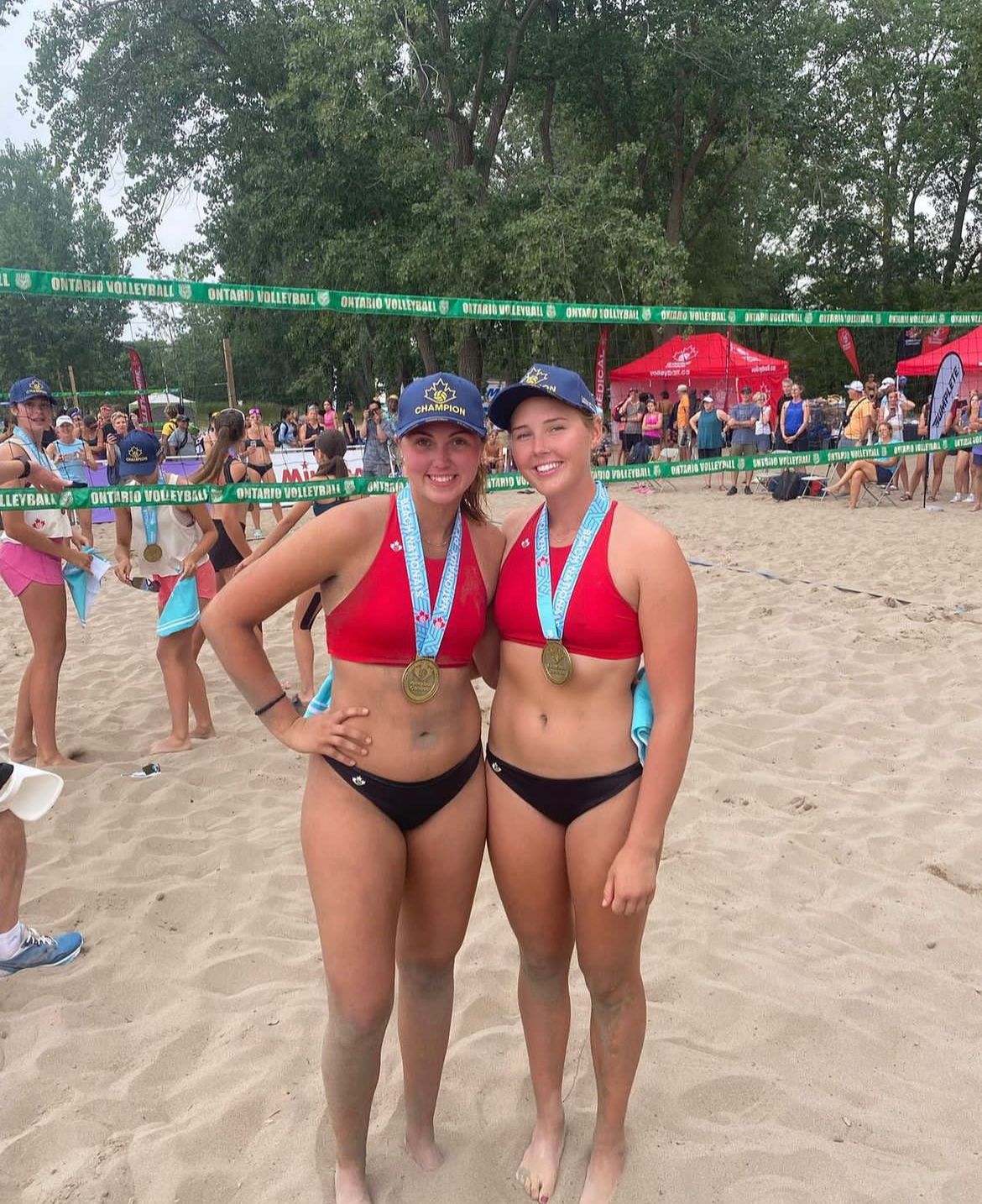
By DAVID WINER Special The Pakmen have drawn a line in the sand that may never be crossed. Competing at the Ontario Volleyball Association Beach Provincials, the Pakmen Volleyball Club prevailed with a flurry of gold medal performances that would confound the most optimistic prognosticator. “It was a record performance!” said ecstatic Pakmen director Kelly Smith. “These were the most Tier 1 gold medals at a Provincial Championship in OVA history.” Many of the 200 enthusiastic youngsters, who took to the six regulation sized courts this summer to participate in Elite Beach training, competed at an unworldly level resulting in 10 out of a possible 15 Tier 1 gold medal showings. “We are especially proud of head coach Jessy Satti after coming off a record-breaking indoor season,” said Smith. “His 18U boys won Provincials and Nationals, and he became the first coach to ever win three consecutive 18U national titles. Now, his male beach athletes performed so well, winning almost every single event, including several all-Pakmen finals, and in some cases, winning gold, silver and bronze. “Also, Arjun Selhi, who played for Jessy as an indoor player and was one of Jessy’s assistant coaches on the beach for three years is now in charge of the girls’ program and they also enjoyed a lot of success.” Assisting Satti on the boys’ side were Omar Abu Jazar, Saad Shaikh and Kadeem Clarke, while Selhi was assisted by Osemi Efosa. “Across the board on the boys and girls side we’ve had a tremendous amount of success, said Satti. “I give a lot of credit to the athletes, who make the conscious decision to stick with their teammates and do beach volleyball with the club. It creates a really good dynamic and team culture. There’s lots of opportunities for players to do different beach programs with other coaches, but I’ve found our athletes enjoy our beach program. It shows that the club is able to offer high quality programming 12 months of the year, and our results from indoor and beach proves that.” Setting the tone were Pakmen trailblazers Salma Abdelrazak on the girls’ side and the tandem of Misha Panasiouk and Aleksa Rakic on the boys’ side who worked overtime to collect two gold medals apiece. Panasiouk and Rakic mastered the 15U and 16U Tier 1 age groups that were chock-full of Pakmen teammates. “I think Misha and Aleks had a great summer. When they played up (16U) and won, it was definitely a special moment,” said Satti. “I think they showed people that the way beach volleyball is played can outweigh factors like size and athleticism. We make sure to teach beach the way we feel it should be played, and we’ve done that since the inception of our club. By getting athletes to buy into the training and structure, it puts them in a position to have a lot of success.” The 15U division, contested August 12-13 at Toronto’s Ashbridges Bay, was swept by Panasiouk and Rakic, followed by silver medalists Davis Hinshelwoods and Spencer Ham and bronze medalists Cooper Spehr and Jonathan Sousa. Pakmen inhabited two of the three podium placings in the 16U competition on August 5-6 with Yahia Elsayed and Chris Tang securing the bronze. The highlight of the tournament for both Panasiouk and Rakic was beating Elsayed and Tang in the 16U semi-final. “We lost to them in the final at an earlier tournament and they became the duo that we always wanted to play and beat,” explained Rakic. “While we lost to them in the first set, we fought through it and eventually won the third set 18-16.” “Even though we were ranked No. 1 entering the competition, the favorites were Yahia and Chris, who are both really good beach players and were also the tournament winners last year,” added Panasiouk. “We are also a year younger than them. But in a really close third game we were able to win, despite the fact the majority of the audience supported the opposing team.” A lot of planning had to go into Rakic and Panasiouk’s style of play considering there would be extra wear and tear on their bodies competing on back-to-back weekends. “Having to play multiple games a day with only about an hour of time for a break, it came down to how efficiently we used our time to rest and recover,” explained Rakic. “Sitting in the shade, and wearing towels and shirts to conserve our energy, was a must. After finishing each day we used our time to recover using ice, a roller and massage gun to prepare us for the next day and stay as fresh as possible.” However, the biggest reason for success, other than talent, is the rapport the two have developed. “Since Misha joined our rep team two years ago we’ve stayed close friends,” said Rakic, who attends Mississauga’s Applewood Secondary School. “Being able to connect easily from this friendship, it was easy to play together. All the time that we spent practicing on the beach and indoors made our basic skills better and helped us learn how to help each other through our struggles. If I’m struggling Misha is there to help me, and if Misha is struggling, I am there to help him.” Panasiouk, who attends Earl Haig in North York, says there’s a number of factors for their success. “The first is, of course, trust. We know that at the most crucial and stressful moment we will make the right decision that will lead the team to success. The second is communication. We are good at making our jobs easier and more efficient by communicating on the court; and the third is we are strong players in terms of set of skills no matter who the opponent serves, we know that we will definitely score a point.” “We are able to adapt and learn from our opponents,” added Rakic. “We understand how our opponents play and not only play to our strengths, but to their

By DAVID WINER

“Don’t sweat the small stuff.”

They are often words of advice from well-meaning individuals, trying to protect those dear to them from stressing over the little things.

And yet, it’s the little things, if done right, that can lead to greatness.
Legendary college basketball coach John Wooden certainly took those words to heart, when he said, “If you do enough small things right, big things can happen.”

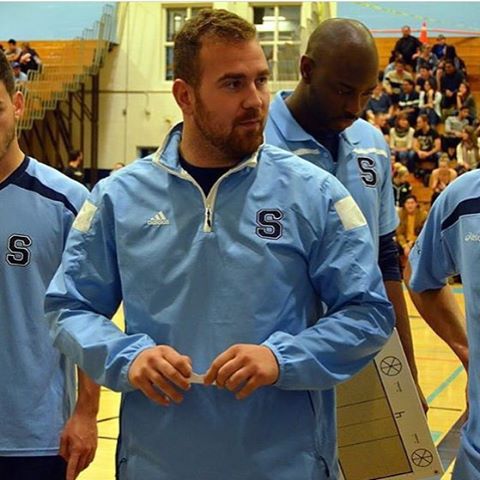
Mississauga Pakmen 17U indoor head coach Jessy Satti, may have had those sentiments in mind when he hired Frank Pento to be his assistant coach this fall for the defending Provincial and Eastern Canadian champions.

A one-time teammate of his while toiling side-by-side with the Sheridan College Bruins, Satti remained good friends with Pento, and decided to pop the question to him late last season after Pento took over as head coach of the Sheridan program.

“Frank and I have known each other for years,” explained Satti. “We played together for three years, and he and I always had a good relationship. So after he got the head coaching job at Sheridan, I thought it would be great to have him come out and help. And it worked out. He started coming out regularly once Sheridan’s season was over, and he helped out a lot in preparation for Provincials and Nationals.”

And what the 27-year-old Pento brings to the table is a penchant for going over the details with a fine tooth comb.

In fact, when Pento took over the Bruins’ program from mentor, Dave McAllister, he ended the school’s 22-year drought between OCAA (Ontario Colleges Athletic Association) medals with a bronze medal showing.

A major reason for the team’s turnaround could be found in the words Pento first uttered when appointed, “I will strongly base our style of play on defence and execution.”

Thankless tasks that often go unnoticed, yet can lead to consistent greatness and cohesion on the court.

“When it comes to passing and defence (Pento) is very detail oriented,” agreed Satti. “He was a libero (as a player), so that discipline of volleyball is his strong suit.

“During practice times he gave the players good feedback on passing, and it translated. In tournaments, he was there to remind the guys, and I feel it helped us be successful and made us a stronger passing team.

“He has very good knowledge of the game,” continued Satti. “He knows a lot when it comes to strategy and tactics and he’s good at scouting opponents.”
Satti cracks a broad smile at the thought of what Pento might accomplish over an entire indoor season.

“I’m excited for this upcoming season going into 17U,” said Satti. “We ended our 16U season with a win at Nationals, so I feel that the guys are motivated to come back and work hard. It’s a long season, so the coaches are excited to start working on some things that we’d like to see them accomplish by the time Provincials and Nationals come.”

Although there may have been a concern, or two, regarding conflicts in schedules, Pento, who will turn 28 later this month, was anxious to give it a try.
“It’s very difficult with the Sheridan schedule being so busy, but coaching with Pakmen is very important to me, so I found a way to make it work.

“I love working with Jessy,” explained Pento. “He has a great mind for the game.

“I helped out a bit last year with this group of guys,” he added. “They are very coachable, and I look forward to working with them again. As far as (having) a speciality, I don’t believe we coaches look at it like that. I still have to sit down with Jessy and see what he wants me to do with specific players. It is an adjustment going from head coach to assistant, and my job is to follow the coach’s plan and help the guys get the most out of every practice.”

Pento, who starred in volleyball, hockey, basketball and soccer for the St. Paul Wolverines, while growing up in Mississauga, was a part of six Peel championship teams, and reached the soccer final at OFSAA (Ontario Federation of School Athletic Associations) in his final year as a goaltender. Therefore, it came as no surprise that he was inducted into the St. Paul Athletic Hall of Fame in June of 2012.

Despite growing up in a soccer-crazed Italian family, Pento soon realized volleyball, not soccer, was his “true calling” and soon chose to attend Sheridan, where he played for four years with the Bruins.

Along with being named a league all-star in 2012, Pento was also the recipient of the Sun Award, which is given to the most newsworthy athlete; the inaugural winner of the Rob Till Award, given to the athlete who best demonstrates leadership, school spirit and contributions to the Sheridan community; and the Male Athlete of the Year Award.

Pento also did a lot of work off the court, spearheading a fundraiser for SickKids Hospital, that far surpassed its intended goal.

“My mother passed away from lung cancer when I was in my fourth year at Sheridan,” explained Pento. “It was a very tough year, but with friends on the team like Jessy, it helped me get through it. I decided that we should do a fundraiser, and make a donation in her name to her favourite charity.

“It was a great honor to win the Rob Till award at Sheridan. I believe that when you join a team, you have a responsibility to be the best you can be for that team, on and off the court. Now, as a coach, I try to pass that same belief to my players.”

Growing up with soccer the No. 1 family sport, and never having played club volleyball, Pento developed an early appreciation for the finer points of volleyball.

“Never played club volleyball,” said Pento. “I wish I did. Pakmen was still in the early stages when I was graduating high school. I was very late to get into the volleyball world.

“(In fact) I was not introduced to volleyball until my early teenage years, and was hooked from day one. It’s an extremely technical sport, and involves a lot of hard work from all members of the team in order to be successful. Volleyball brings a great feeling of brotherhood and teaches players about the importance of teamwork, work ethic, and reaching goals.”

Those virtues were in the forefront of the Bruins’ season, ending with a comeback victory in last season’s bronze medal match.

“Many times last year we found ourselves needing to come from behind to pick up a win,” said Pento. “That definitely helped prepare us for the situations we faced in the playoffs. The most important thing is that the players must believe they can do it. That belief comes from a full season of hard work, game experiences, and the guys ‘buying in’ to the coaches’ system. I can prepare them as best as possible, give them motivational speeches, and make tactical adjustments, but the boys need to believe deep down that they are going to get it done.

“I was very fortunate to have a veteran squad, and they helped my transition into the head coaching role. Coaching club is going to be a totally different experience, because at the college level, most players already have all the technique, understanding, and physical abilities required for the game. With a younger club team, we are dealing with young men who are still growing, still learning, and still gaining an understanding for the game. I look forward to helping develop these players into future Varsity athletes.”

Satti, and his defending Provincial and Eastern Canadian championship lineup can’t wait either.

Liked it? Then, SHARE IT!

Seraphinite AcceleratorOptimized by Seraphinite Accelerator
Turns on site high speed to be attractive for people and search engines.